

{{item.Subject}}
Industry News
Learn about events, happenings and more
The Pajero badge is back! Here's what you need to know about Mitsubishi's reborn 4x4
Thursday, 03 September 2026 | James Coleman
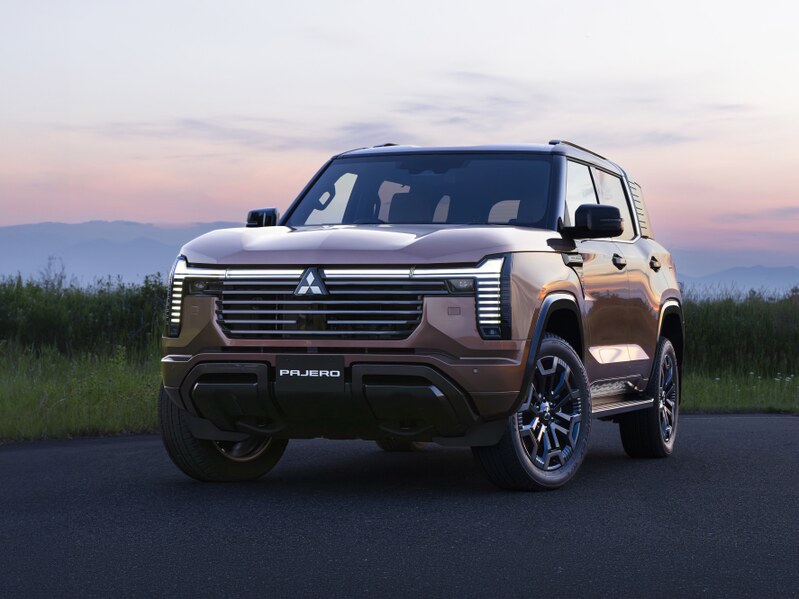
It's hard to think of anything else so breathlessly awaited in 2026 than this.
Twenty years after the launch of the fourth-generation model, and five years after it disappeared from local showrooms, Mitsubishi has officially pulled the wraps off a brand-new Pajero.
Taking design inspiration from the brand's glory days in the Dakar rally, it also lines up squarely against heavyweights like the Ford Everest and Toyota Prado.
Here are the five key most developments this time around ...
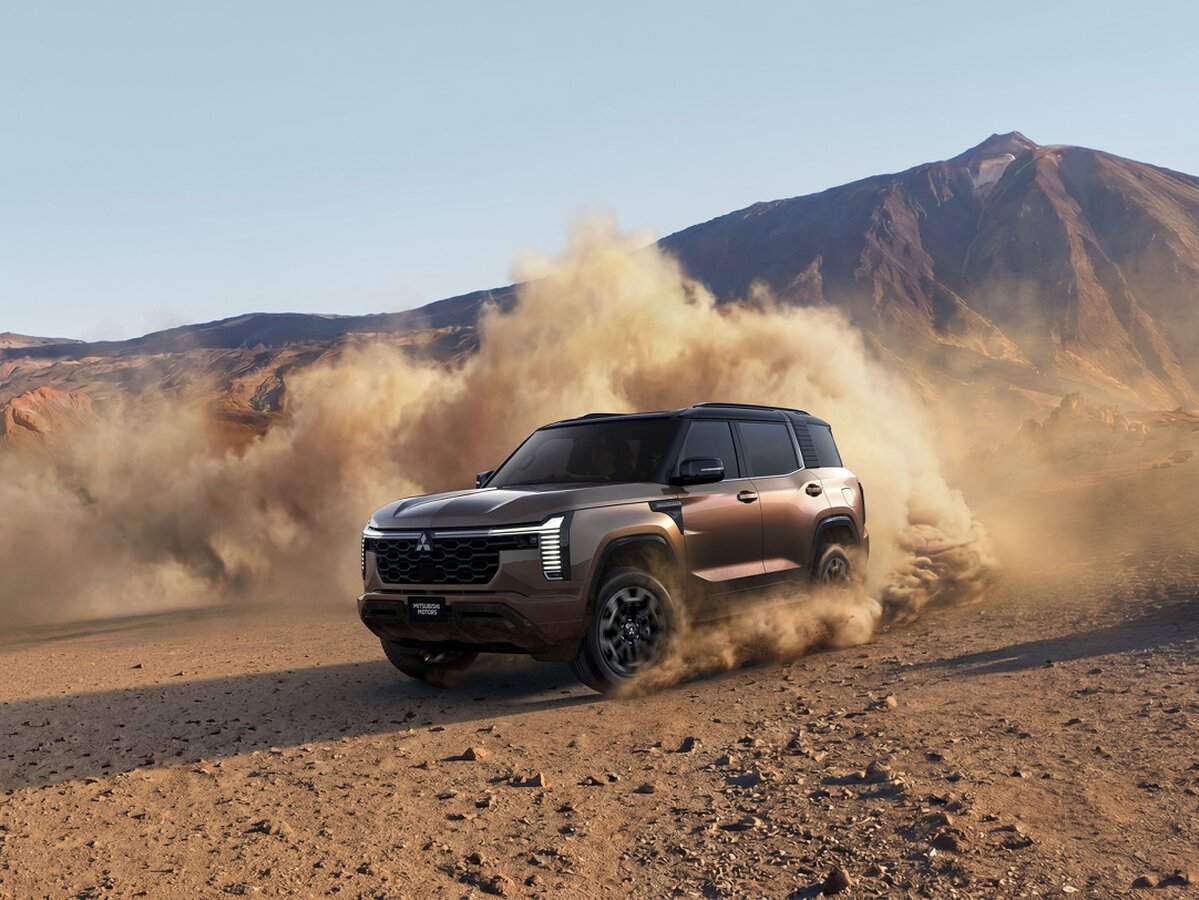
Trying to prove it could do Dakar again. Photo: Mitsubishi.
1. It switches back to a heavy-duty ladder-frame chassis
Where the old Pajero used a monocoque chassis all the way from 1999 to the last model in 2021, the new one is built on a modified version of the Triton ute's ladder frame.
Mitsubishi says it offers superior durability off-road, with thicker side members and extra cross-bracing designed to handle more of a punishment.
For the nerds, it also keeps a double-wishbone front suspension setup, but pairs it with a brand-new rigid rear axle on coil springs - rather than medieval leaf springs.
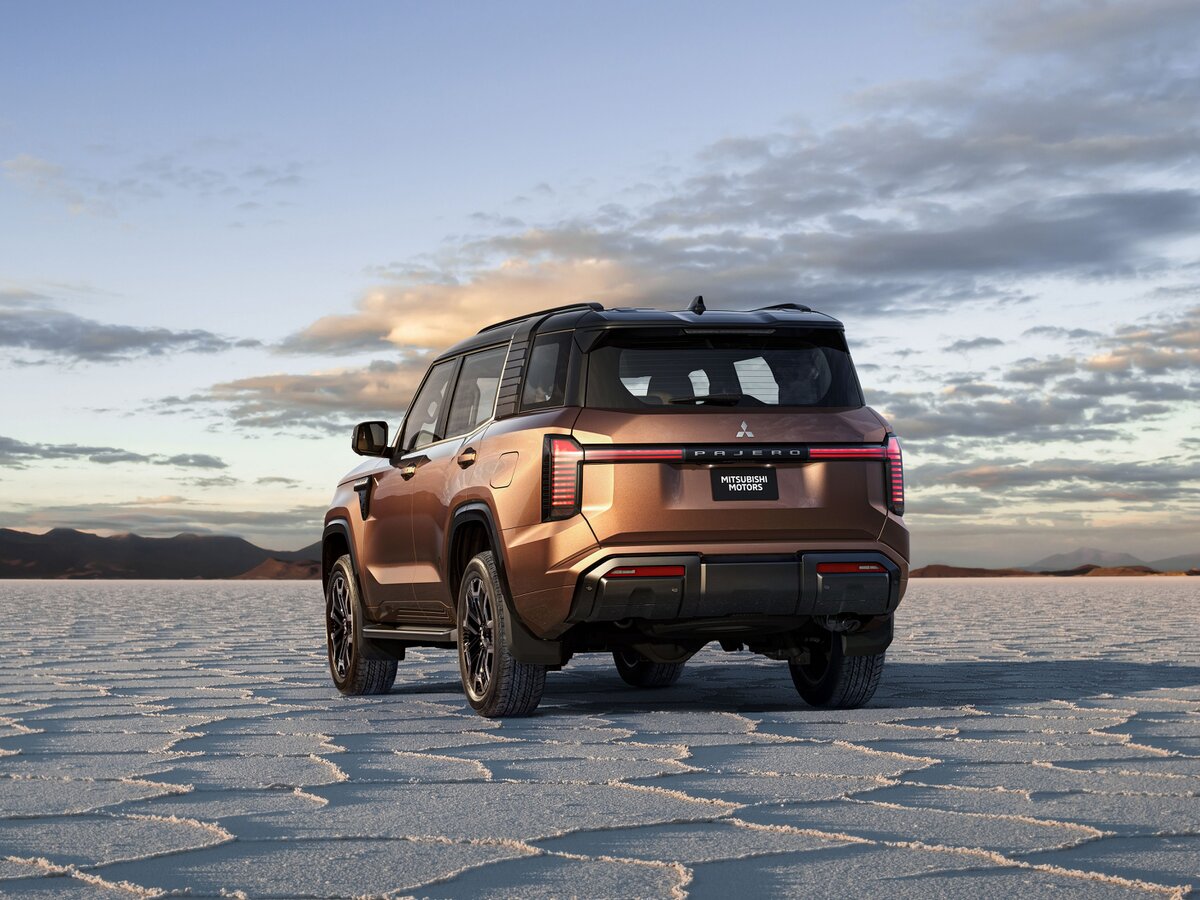
That hexagon-shaped bulge on the back? A nod to when the Pajero had a spare tyre there. Photo: Mitsubishi.
2. Single-turbo diesel power with 480 Nm of torque
Rather than squeezing a heavy V6, or making any kind of sacrifice to the gods of the environment with a hybrid setup, launch models rely solely on a 2.4-litre '4N16' four-cylinder turbo-diesel. Unlike its Triton twin, however, the Pajero uses a single turbocharger tuned to deliver 150 kW and 480 Nm.
That engine is joined on the spec sheet by a new eight-speed automatic transmission, Mitsubishi's "Super Select 4WD-II" system, and an upgraded 3.5-tonne braked towing capacity.
3. It has the face of a Kendo warrior
The Mitsubishi Pajero was the brand's most successful entrant in the formidable Dakar Rally, with 12 overall victories between 1985 and 2007. And it seems they want to relive those heady days in the design at least.
The boxy exterior nods to the original 1982 model, with its upright stance and roll-bar-inspired C-pillars. The spare tyre might now be mounted underneath, but that subtle hexagonal tailgate contour is a deliberate reference to when was mounted on the back. Up front, buyers can choose between a horizontal-bar or honeycomb grille.
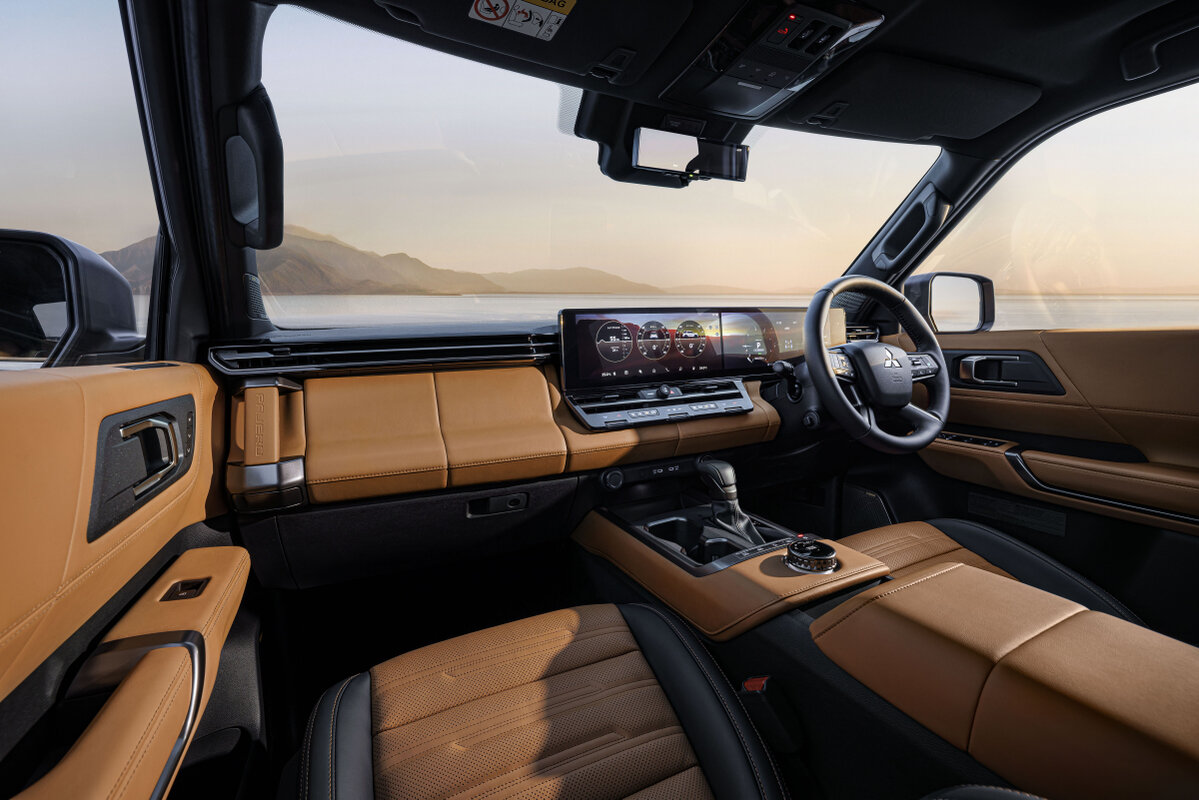
Pricing hasn't been confirmed, but here's what the top-spec GSR looks like on the inside. Photo: Mitsubishi.
Inside, the cabin gets a high-end overhaul with semi-aniline leather, twin 14.3-inch screens, custom 12-speaker Yamaha Ultimate sound system, and digital "Multi Meter" that reimagines the retro altimeter and pitch-and-roll dials.
The contrast stitching is said to emulate the traditional Japanese craft of Kimekomi, "creating a sense of depth and premium quality", while the car's face is inspired by a kendo mask (think Japanese fencing with bamboo swords).
4. Off-road tech that makes the bonnet disappear
Beyond seven terrain-specific drive modes (Normal, Eco, Gravel, Snow, Mud, Sand and Rock), and "Super All-Wheel Control" (S-AWC), the Pajero debuts a "3D Multi-Around Monitor". Running at 30 frames per second, it adds a front-under floor view so you can see what rocks and ruts might be lying in wait to take out your sump.
5. It'll make the perfect Christmas present
Built alongside the Triton at Mitsubishi's manufacturing plant in Thailand, the Pajero will launch locally between October and December 2026, with preorders expected to open "imminently" across four familiar trim grades: GLX, GLS, Exceed, and GSR.
Prices start at $68,490 for the 5-seat GLX, $69,990 for the 7-seat GLS, $79,990 for the Exceed, and $84,990 for the GS-R - making it cheaper than the Toyota Prado, but above the Ford Everest.
Or, keep an eye on weekly Commercial & 4x4 auction for cars like the Pajero ...
|
|